
Rush Job: Australia’s new hate speech bill set to be scuttled
Free speech concerns have left the legislation in tatters


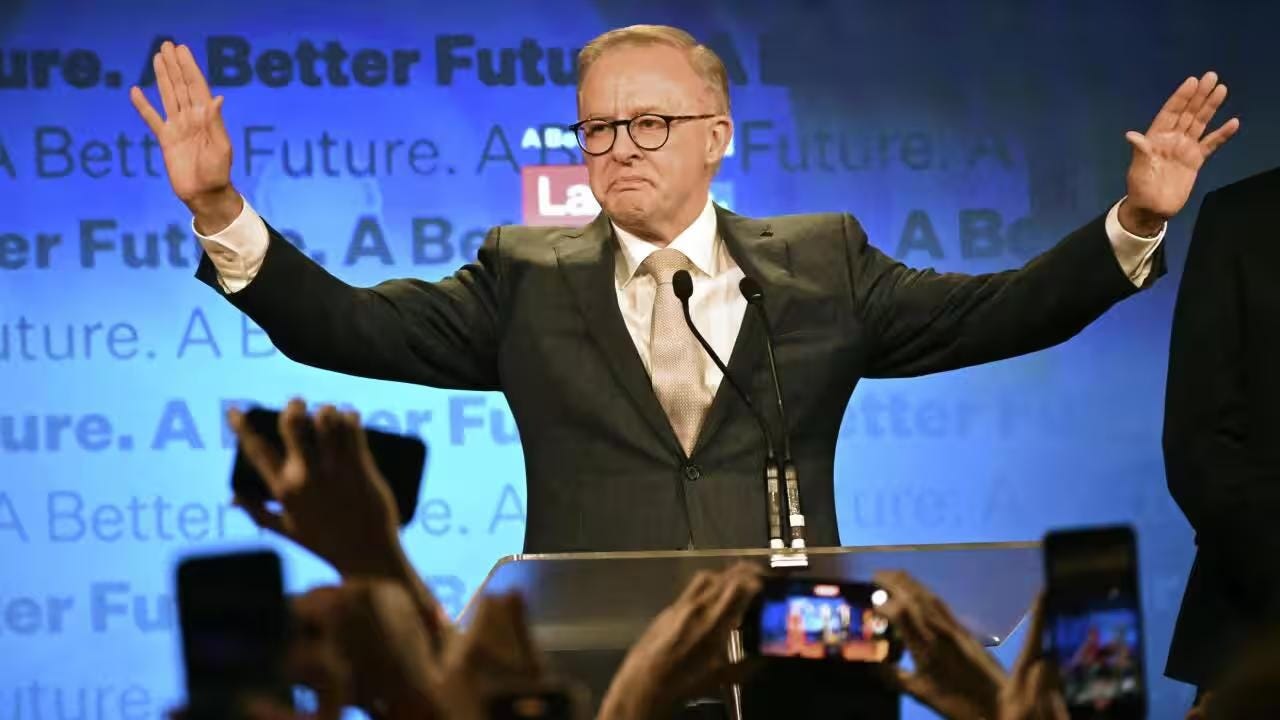
Free speech is not dead yet in Australia if the backlash to proposed hate speech laws stays the course, with condemnation coming from both the Left and the Right.
Following the mass shooting of 15 mostly Jewish civilians at Bondi Beach in December, the Labor government recalled parliament two weeks early in an attempt to ram through a massive omnibus bill to crack down on alleged hate speech and tighten gun controls and migration law.
The Royal Commission into the incident to find out how the worst terror attack in Australia’s history was allowed to happen hasn’t even begun yet, but the government has already decided that hate speech was a key cause that must be immediately dealt with.
The sprawling Combatting Antisemitism, Hate and Extremism Bill 2026 advances what Attorney General Michelle Rowland called “the toughest hate laws Australia has ever seen,” with new offences for hate preachers (except when quoting directly from religious texts) and people publicly promoting hatred or ideas of racial superiority, and tougher penalties for hate crimes.
Controversially, the new laws would criminalise speech absent demonstrable harm if a “reasonable person” of the target race or ethnicity would be “intimidated” or “fear harassment” – a subjective test based on a hypothetical situation.
In a submission to the government’s review process, human rights lawyer Peter Fam of Sydney firm Maat’s Method lists some potential scenarios:
An academic writing about the Israel/Gaza conflict; a playwright depicting a religious extremist; or a whistleblower sharing information about the influence of ethnic-based lobby groups over Australian foreign policy.
All would need to think twice lest they risk a five-year jail term. “It does not regulate harm,” said Fam of this part of the bill. “Rather, it seeks to regulate discomfort.”
There are plenty more contentious elements. The expansion of the term “public place” to include online expression would expand the government’s online powers, chilling online discourse.
The Minister in charge of the federal police will have the power to designate “prohibited hate groups” without mandatory judicial oversight nor any direct appeal mechanism for the group itself, denying procedural fairness. Given past politicisation of enforcement of speech laws by government — be it Home Affairs co-ordinating the takedown of memes during the pandemic, or eSafety going after ‘misgendering’ online — it is not only plausible but likely that this will lead to overreach where political or activist groups are unfairly swept up or even targeted.
And, the burden of proof for symbol-related offences has been reversed, meaning that people charged with displaying a prohibited symbol must prove their innocence, rather than prosecutors being required to prove criminal intent or harm. This may seem tangential, but the case of playwright and author CJ Hopkins, who has been dragged through German courts for years over the satirical use of a swastika on a book cover, is illustrative.
Compounding all this awfulness is the fact that some sections of the bill, if passed per their current form, will be retrospective, meaning people can be arrested for things they said (or tweeted) in the past.
What the bill doesn’t do is address the government’s own failings which allowed alleged killers Sajid Akram and his son Naveed Akram to travel to an extremist hotspot in the southern Philippines just weeks before the Bondi shooting, and for Said to purchase multiple firearms despite Naveed having previously been on a security service watch list due to his associations with a Sydney-based IS cell.
Yet, like other liberal democracies, Australia has consistently responded to social division and isolated acts of violence not by dealing with the root of the problem, but by attempting to dictate the bounds of the Overton window.
But, as noted in a submission by digital rights group liber-net (of which Andrew is CEO), treating complex social and political problems as technical compliance issues to be micromanaged through regulation is a technocratic reflex that, while creating the appearance of decisive action, often serves to suppress underlying core issues and dissent rather than resolving them.
Listen to Andrew on Josh Szeps’ podcast Uncomfortable Conversations discussing the hate speech bill and other recent free speech controversies in Australia.

We need only look to the UK, to see that when the government convicts or harasses people for tweets rather than dealing with serious social issues such as discontent over migration and failed assimilation, the temperature does not subside, but rises to boiling, with aggressive policing of speech failing to tamp down protests.
As flagged by Dr Reuben Kirkham, director of the Free Speech Union of Australia, this bill “is an expanded copycat of provisions in the UK that are being used basically to arrest 30 people a day (for social media posts).” While some of these arrests have covered actual incitement to violence, police have shown up at people’s houses for complaining about a school on private messaging channel WhatsApp or sharing an anti-Hamas meme on social media.
With both the leftist Greens and the conservative Coalition coming out against the bill, it is certain that the current iteration will not pass given that Labor needs one or the other to have it passed in the Senate next Tuesday.
The Coalition is currently calling the bill “unsalvageable,” but it’s possible that the Greens will work with the government to craft a revamped version that’s even more restrictive. While the Greens have concerns over the bill’s impact on protest rights, they want hate speech protections extended to other identities including gender, sexuality, disability and religion.
However, no one in government seems to be much interested in whether the hate speech laws will actually do anything, or whether they are even justified, and political discussion of the bill has largely skirted the fact that the Bondi massacre appears to have been the result of intelligence and policing failures, not a lack of speech regulation.
We requested comment from authorities on whether the new laws would have prevented the Bondi terrorist attack had they been in place as far back as 2019, when ASIO first investigated alleged shooter Naveed Akram, but they refused to say. ASIO referred our enquiries to the Department of Home Affairs, and the Department deflected, stating, “the circumstances of this incident are part of an ongoing investigation.”
The impetus as far as the hate speech controls are concerned appears to be forcing a sense of cohesion on the community – but serious questions remain about whether this is possible in a multicultural society where people hold clashing values and beliefs.
New South Wales Premier Chris Minns said the quiet part out loud last year when justifying his state’s new hate speech laws on the basis that free speech is incompatible with multiculturalism:
“We don’t have the same freedom of speech laws that they have in the United States. And the reason for that is that we want to hold together our multicultural community and have people live in peace free from the kind of vilification and hatred that we do see around the world,” Minns told the press.
This apparent trade off was not something Australians were consulted over as the government has increasingly opened our borders.
When challenged to repeal the new hate speech laws after the justifying incident – a bomb scare targeted at the Jewish community – was revealed to have been a hoax, Minns argued that scrapping them would “be a toxic message to our community that this kind of hate speech is acceptable when it’s not.”
It’s the same rhetoric from the federal Labor government this time, per Attorney General Rowland:
“[The new hate speech laws] will specifically target those who seek to spread hatred and disrupt social cohesion in our community. And it will send a clear message that this conduct will not be tolerated.”
In other words, legislation as a social engineering and public messaging tool. But at what cost?
What should be resisted now is: the transformation of lawful expression into a criminal act where no tangible injury, threat, or victim can be established; the removal of due process from policing procedures; and the reversal of the ‘innocent until proven guilty’ standard. This bill advances exactly these developments.
Thankfully, it looks set to be roundly rejected, although a later agreement between Labor and the Greens could well produce something even worse. For now, free speech has a stay of execution.
 | A guest post by
|
Very well argued. What strikes me most about this dire piece of legislation is the speed at which it has appeared. It is some 155 pages long, along with explanatory notes twice that length. It's not quite War and Peace, but there's no way it was written after December 14th. Unless it was written by AI, of course.
Everyone knows we need better policing, not more policing. But, just like Convid wasn't about health, this isn't about safety. Always about control. Every last manouver.